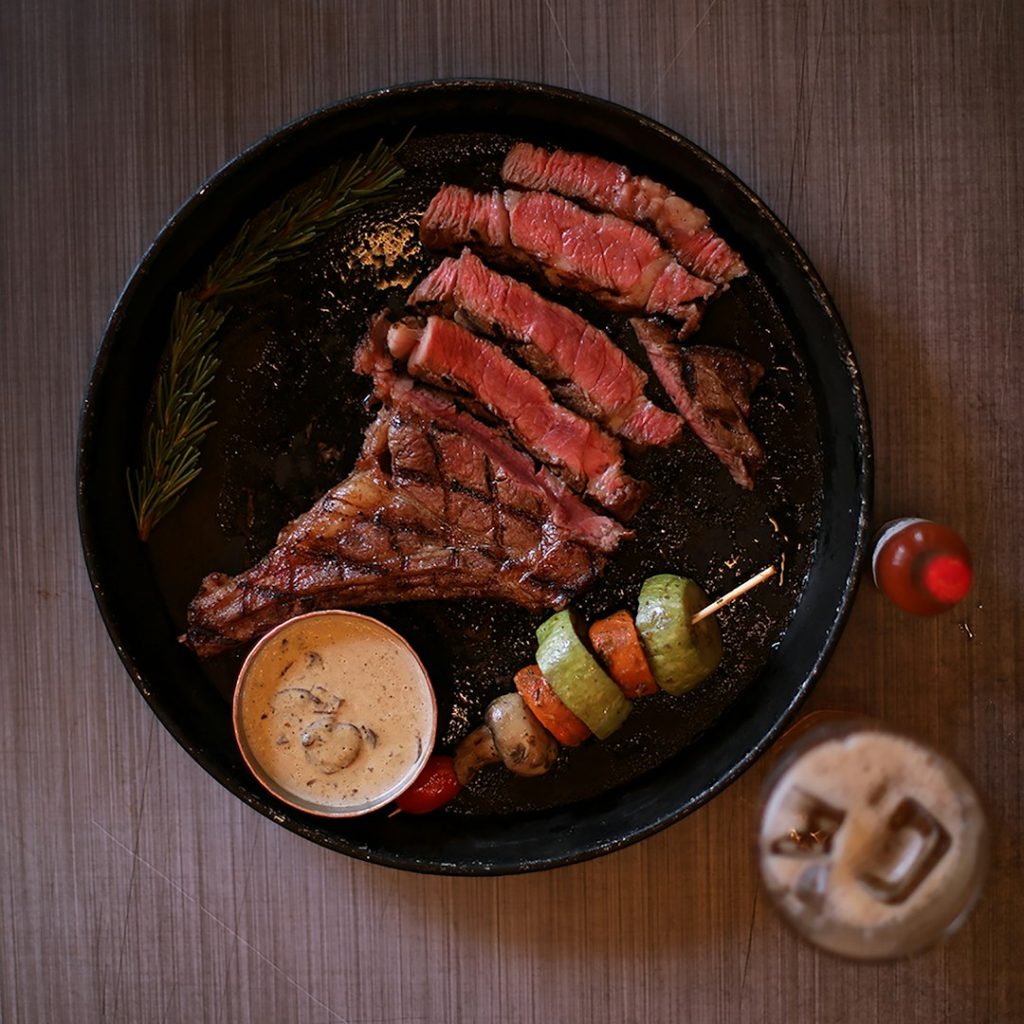
The ribeye is the cut that earned its reputation honestly: heavy marbling, big beefy flavor, forgiving on the grill. But “easy to cook” doesn’t mean foolproof. The difference between a $30 ribeye that’s worth it and a $30 ribeye that disappoints comes down to four things — the cut, the temperature, the rest, and the heat. Here’s how we do it.
1. Start with the right cut
A boneless ribeye should be at least 1¼ inches thick — anything thinner cooks too fast to develop a real crust. Look for marbling distributed in fine threads throughout the muscle, not just one big chunk of fat at the edge. The fat is where the flavor comes from; intramuscular marbling is what makes the difference between “fine” and “great.”
At the counter, ask for a Creekstone Black Angus ribeye, dry-aged 21 days. Dry-aging concentrates flavor and tenderizes the meat — a 16-oz steak dry-aged three weeks eats like an 8-oz Wagyu.
2. Salt early, temper to room
An hour before you cook, salt both sides of the steak generously with kosher salt — about ¾ teaspoon per pound. This isn’t seasoning, it’s a process: the salt draws moisture out, then reabsorbs it as a brine, seasoning the steak from within and helping the surface dry. Dry surface = better sear.
Let the steak sit out on the counter for 45 minutes before it hits the pan. Cold steak from the fridge is the #1 reason home cooks end up with a gray band of overcooked meat under the crust. Room-temperature steak cooks evenly.
3. Get the pan ripping hot
Cast iron is the right tool. Heat the empty pan over high heat for at least 5 minutes — when you can hold your hand 4 inches above and it’s uncomfortable in 2 seconds, you’re there. Add a tablespoon of neutral oil (canola, grapeseed, anything with a high smoke point — not olive oil) and let it shimmer for 15 seconds.
Lay the steak in away from you. Don’t move it for 3 minutes. Flip, then 3 minutes on the second side. Stand it on its fat edge for 30 seconds to render the cap. Total time: 6½ minutes for a 1¼-inch steak to hit 125°F internal, which carries to 130°F after rest — that’s medium-rare.
4. Butter-baste the last minute
In the final minute, drop in two tablespoons of butter, a smashed garlic clove, and a sprig of thyme. Tilt the pan toward you, spoon the foaming butter over the steak repeatedly. This is the move that separates “I cooked a steak” from “I cooked a ribeye.” The butter browns, the herbs perfume it, and the steak picks up a glossy lacquer.
5. Rest. Then rest some more.
Pull the steak to a cutting board and let it rest 10 minutes. Don’t tent it with foil — you’ll soften the crust. The rest matters more than people think: muscle fibers contract during cooking and squeeze juices toward the center. Rest lets them relax and redistribute. Cut a steak too early and half of it ends up on the cutting board.
Slice against the grain, sprinkle with flaky sea salt, and you’re done.
The numbers, in case you’re a checklist person
- Steak thickness: 1¼ inch minimum
- Salt: ¾ tsp kosher per pound, applied 45–60 min ahead
- Pan temp: ripping hot (high heat, 5 min preheat)
- Sear: 3 min / side + 30 sec on the fat edge
- Pull temp: 125°F internal (medium-rare)
- Rest: 10 minutes, uncovered
Stop by the counter and we’ll cut you a Creekstone ribeye while you wait — or order one online for pickup or local delivery. Either way, you’ll cook it better than any restaurant within an hour of here.